

How to compete on value without cutting your prices
Three ways to show customers why your business is worth choosing, without making price your only advantage.
In this article
How can a business compete without lowering its prices?
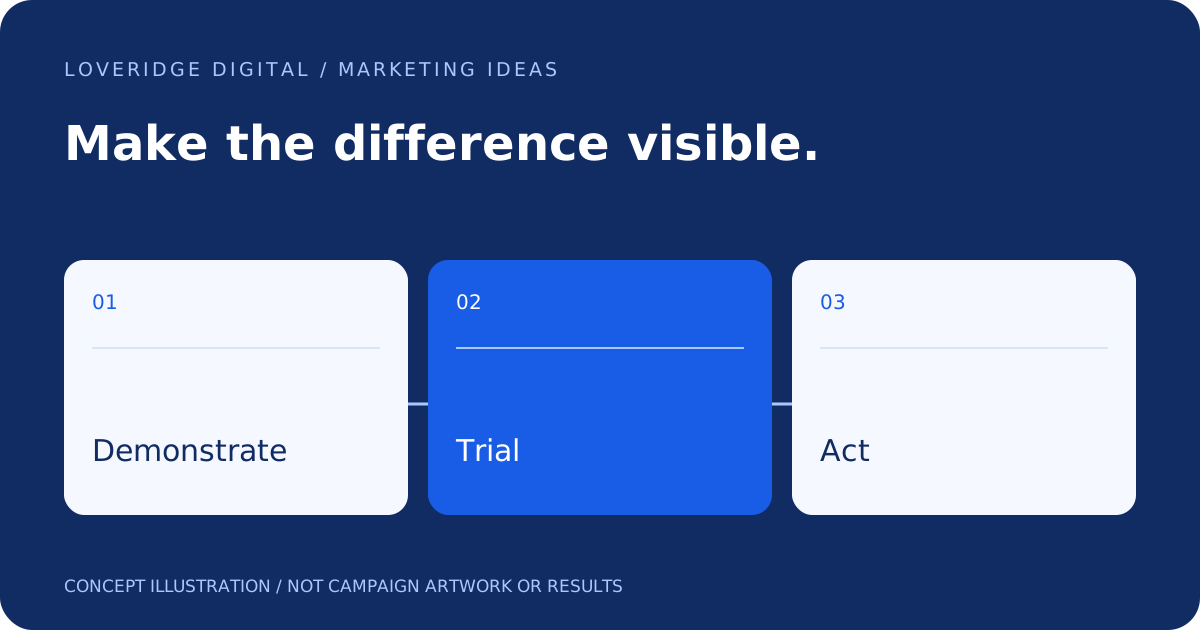
A business can compete on value by showing a meaningful difference, giving customers a way to experience it and making the next step easy. That difference might be product performance, service, convenience or confidence in the result. The proof needs to matter to the buyer.
When customers cannot see a useful difference between two options, price becomes an obvious way to choose. Saying you offer “premium quality” rarely resolves that comparison. Showing what the customer gets, how it works and why it suits their needs gives them something more useful to assess.
Three well-known campaigns offer different ways to approach that challenge.
Make your advantage visible
Read the full campaign analysis →In 2017, IKEA responded to the comparison between its FRAKTA bag and a Balenciaga tote with a playful guide to identifying the original. Its everyday usefulness became part of the joke. IKEA Museum’s account records the response.
The useful lesson is to demonstrate a benefit customers can recognise. For a machinery supplier, that might be a filmed demonstration of an adjustment or maintenance task. For a service business, it could be a clear explanation of what happens before, during and after the job.
Choose a benefit you can show honestly. A specific demonstration gives the buyer more to work with than another claim about being the best.
Let customers experience the difference
Read the full campaign analysis →Lululemon’s 2023 Dupe Swap invited people in Los Angeles to exchange lookalike leggings for Align leggings. The event producer’s portfolio describes a campaign built around trying the product.
For another business, the equivalent could be a guided demonstration, a sample pack or a small paid pilot. Match the experience to the uncertainty preventing the purchase. If buyers doubt the fit, show the fit. If they doubt the process, let them see how it works.
Set a limit on the trial and decide what should happen afterwards. Giving something away creates activity; a well-designed trial should also help the customer make a decision.
Connect attention to a useful action
Read the full campaign analysis →Heinz’s Ketchup Fraud campaign highlighted other ketchup being served in Heinz bottles. Its campaign page invites people to identify restaurants that need help serving Heinz.
The transferable idea is the connection between the campaign message and the next step. A post about unclear service packages could lead to a scope comparison. A demonstration could lead to a product consultation. The landing page should continue the conversation that brought the person there.
Build a campaign around one buying hesitation
Start by writing down the question a prospect asks just before choosing a cheaper option. Then complete this short brief:
- Buyer: Who is making the decision, and what are they trying to achieve?
- Hesitation: What makes them unsure that our offer is worth the price?
- Proof: What can we demonstrate, document or let them experience?
- Action: What is the easiest useful step towards a purchase?
- Measure: What would show that the campaign influenced a real buying decision?
For example, a hypothetical regional service business might discover that customers are comparing a basic quote with an offer that includes planning and follow-up. A short process video and an inclusions checklist could explain the difference. A request for a scoped quote would then be a more relevant action than a generic newsletter signup.
This is where digital marketing strategy should connect the message, creative, website and follow-up. Each part needs to help the same buyer make the same decision.
What is anti-dupe marketing?
Anti-dupe marketing describes campaigns that respond to lookalike products or substitutes by making the original brand’s value more visible. It is a useful label for some campaigns, but it does not make every cheaper alternative a counterfeit or every brand response the same strategy.
How do you measure whether the approach is working?
Track the steps between exposure and a sale: relevant visits, enquiries, qualified opportunities and purchases. Compare the full campaign cost with the contribution from the business it generates. Reach and engagement can help explain attention, but they cannot establish profitability on their own.
Need a clearer reason for customers to choose your business? Talk to Loveridge Digital about turning your strongest difference into a campaign people can understand and act on.
Related reading
IKEA’s Balenciaga response: what small businesses can learn
What IKEA’s response to Balenciaga teaches smaller businesses about relevance, product proof and timely creative.
Read article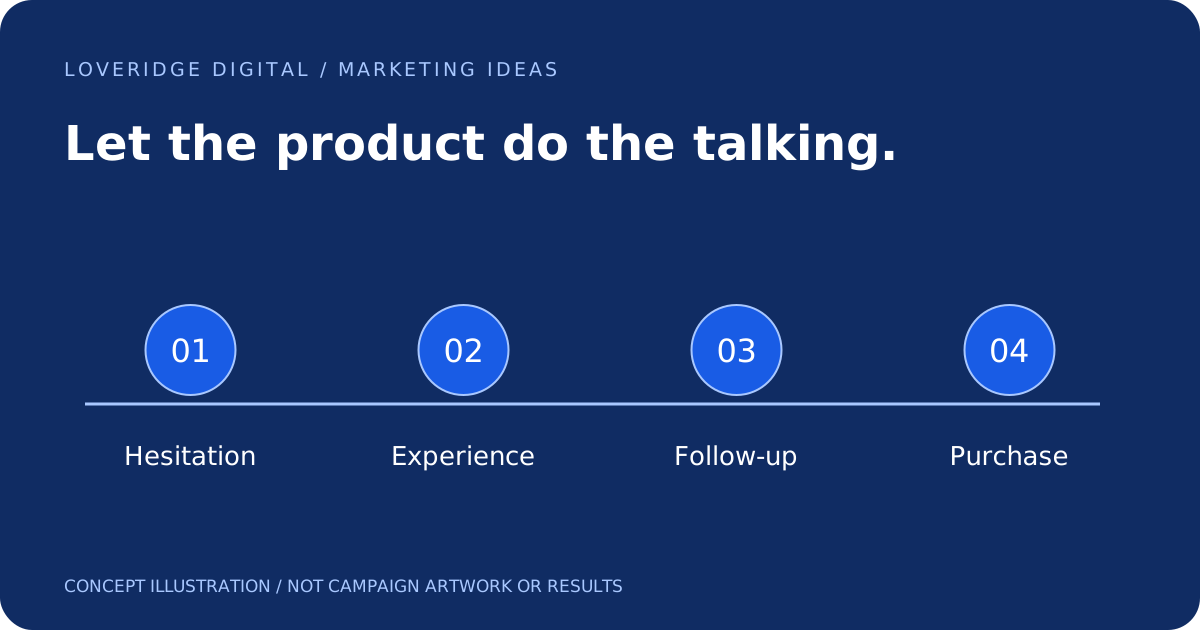
Lululemon’s Dupe Swap: how to design a product trial
How to build a trial that resolves buying hesitation, and measure what happens after people take part.
Read article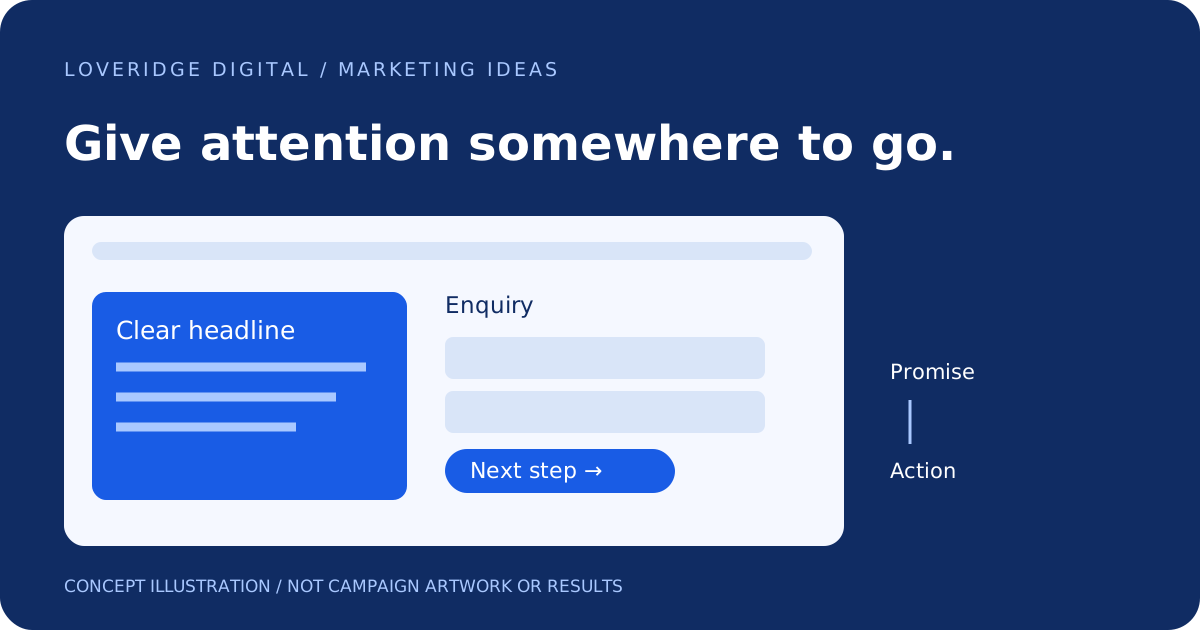
Heinz’s Ketchup Fraud: connecting creative campaigns to leads
A memorable campaign needs a useful next action. Here’s how to connect creative, landing pages and follow-up.
Read article