

Lululemon’s Dupe Swap: how to design a product trial
How to build a trial that resolves buying hesitation, and measure what happens after people take part.
In this article
What was lululemon’s Dupe Swap?
Lululemon’s 2023 Dupe Swap was a Los Angeles activation where guests could exchange lookalike leggings for Align leggings. Miles Diggins’ portfolio describes Optimist’s role in the experience. The idea gave people a way to assess the product firsthand.
That makes it a useful example for businesses whose value is easier to experience than explain. A product description can list features. A well-designed trial can help someone decide whether those features matter to them.
Did the campaign convert half its visitors into customers?
That is not what the cited result says. In its 2024 proxy statement, lululemon reported that approximately 50% of guests who traded in dupes told the company they were new to the brand.
That is a self-reported characteristic of the people taking part. It is not a 50% paid-purchase conversion rate, proof of repeat buying or a standalone ROI calculation. Its appearance in a corporate filing does not make this campaign metric an audited financial result.
The distinction matters when planning your own trial. Attracting new people and acquiring profitable customers are separate things to measure.
How do you design a trial that helps people buy?
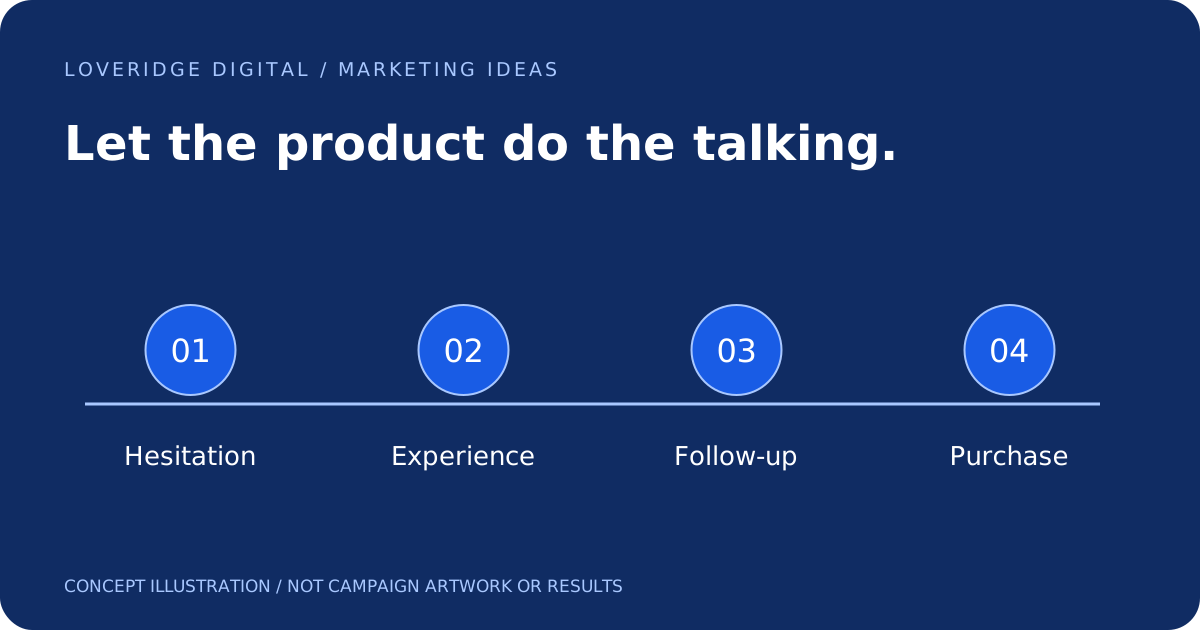
Begin with the hesitation you need to resolve. For a physical product, it might be comfort, taste or ease of use. For a service, it might be uncertainty about the process or the quality of the output.
Then choose the smallest useful experience that addresses that hesitation. A guided product demonstration, a modest sample pack or a tightly scoped paid pilot may be enough. A broad giveaway can be expensive without teaching the customer much.
Make the experience easy to understand:
- Explain who it is for and what they will receive.
- Set clear limits on availability, timing and what is included.
- Help participants use or assess the product properly.
- Give them a relevant next step and a way to ask questions.
A hypothetical coffee roaster, for example, could pair a tasting pack with a simple brewing guide and a recommendation based on the customer’s preference. The follow-up would continue the experience instead of jumping straight to a generic discount.
How much can you afford to spend?
Build the budget around the full cost: samples, delivery, event or platform expenses, staff time, promotion and follow-up. Keep the cost of serving subsequent paid orders in the contribution calculation so it is not counted twice.
For illustration only, suppose a trial costs A$3,000 and produces 30 new paying customers attributable to the campaign. That is A$100 in campaign cost per new paying customer. If each first purchase contributes A$60 after its variable costs, those first purchases contribute A$1,800. They have not yet covered the trial cost.
Repeat purchases may improve the result, but measure them over a defined period before treating them as earned value. This example is a planning calculation, not a benchmark or a prediction.
Which trial metrics are useful?
Track participation, completion, new versus existing customers, subsequent paid purchases and repeat orders. Record the attribution method and measurement window. Where practical, compare results with a similar group that did not receive the offer.
These measures help distinguish a popular free experience from a commercially useful one. They also show where the trial needs improvement: the audience, the experience, the follow-up or the offer.
A connected digital marketing strategy can bring those steps together. Talk to Loveridge Digital about designing a trial campaign with a clear buying decision and measurement plan.
Explore the complete strategy: How to compete on value without cutting your prices.
Related reading
How to compete on value without cutting your prices
Three ways to show customers why your business is worth choosing, without making price your only advantage.
Read article
IKEA’s Balenciaga response: what small businesses can learn
What IKEA’s response to Balenciaga teaches smaller businesses about relevance, product proof and timely creative.
Read article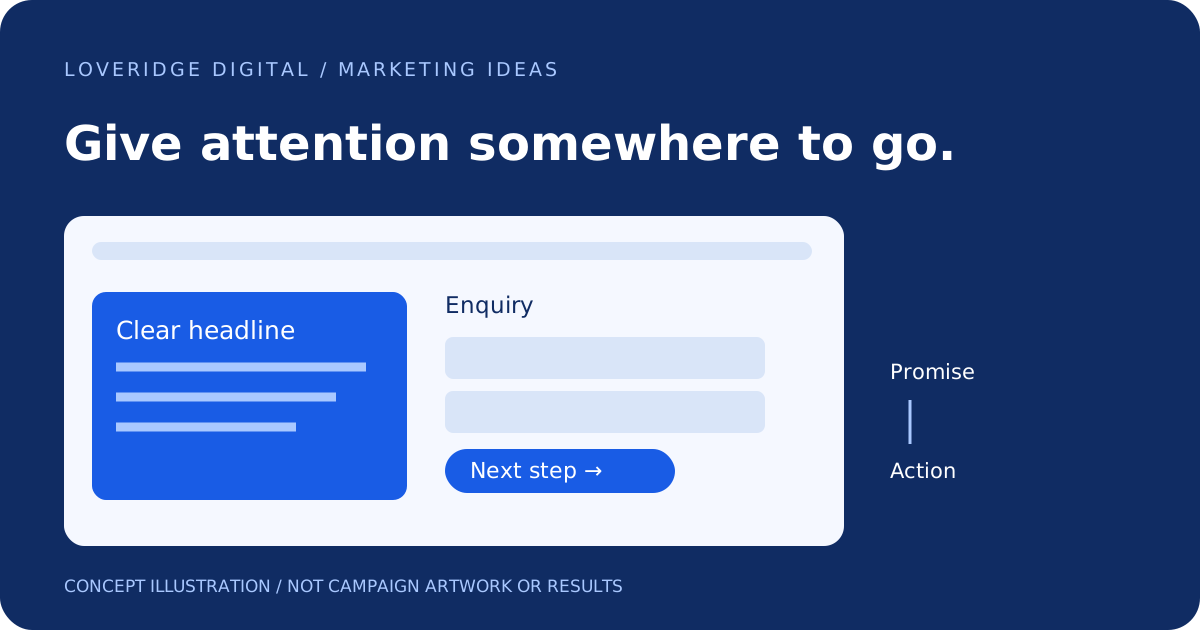
Heinz’s Ketchup Fraud: connecting creative campaigns to leads
A memorable campaign needs a useful next action. Here’s how to connect creative, landing pages and follow-up.
Read article